


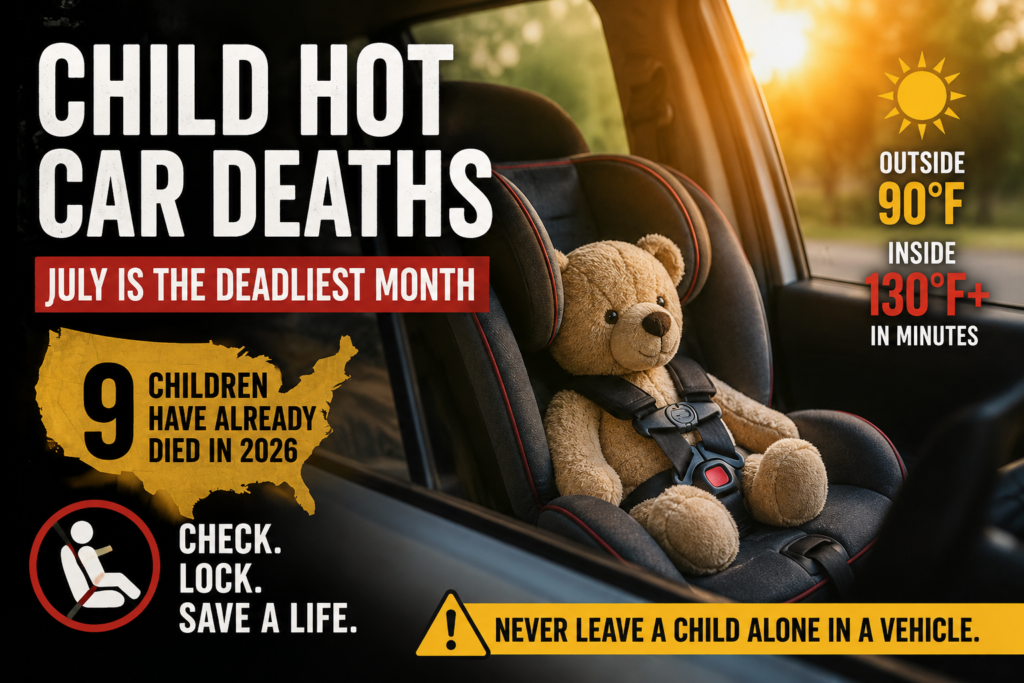
As North Carolina enters the hottest part of the summer, child safety advocates are urging parents and caregivers to remain alert after at least nine children have died in hot vehicles across the United States so far in 2026.
According to data from NoHeatstroke.org and Kids and Car Safety, the deaths occurred between March and June in Florida, Tennessee, California, Alabama, Virginia and Pennsylvania. July has historically recorded more child hot car deaths than any other month, making the coming weeks the most dangerous time of the year.
The most recent tragedy occurred June 29 in Plantation, Florida, where an 18-month-old boy died after investigators said he was unintentionally left inside a vehicle for several hours when his father believed he had been dropped off at daycare.
The other confirmed deaths this year include an infant girl in Winter Haven, Florida; a 7-month-old boy in Monterey, Tennessee; a 4-year-old girl in Los Angeles; a 13-month-old boy in Brookwood, Alabama; a 2-month-old boy in Fredericksburg, Virginia; a 15-month-old girl in Lower Nazareth Township, Pennsylvania; a 3-year-old boy in Grove Hill, Alabama, who reportedly entered a vehicle on his own; and a 3-year-old boy in Riverview, Florida.
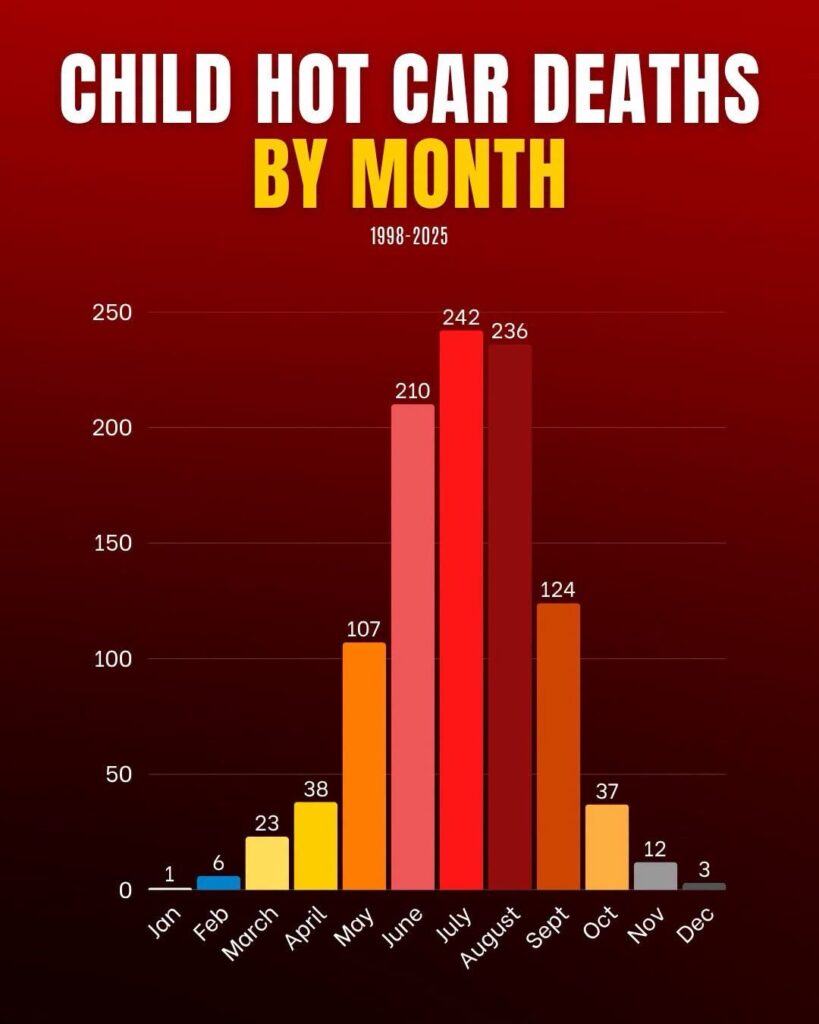
Since 1998, more than 1,050 children have died from pediatric vehicular heatstroke in the United States. An average of 37 children die each year after being left in or gaining access to hot vehicles.
More than half of all victims are younger than 2 years old. Safety organizations report about 53% of cases involve a caregiver unintentionally forgetting a child in a vehicle. About 24% occur after a child enters an unlocked vehicle without an adult’s knowledge, while roughly 22% involve a child knowingly left inside.
Children are especially vulnerable because their body temperatures rise three to five times faster than adults. Even when outdoor temperatures are in the 70s, the inside of a parked vehicle can reach life-threatening temperatures within minutes. Cracking the windows provides little protection.
The National Highway Traffic Safety Administration recommends parents and caregivers always check the back seat before locking their vehicle, place a personal item such as a phone, purse or work badge next to the child’s car seat as a reminder, and keep parked vehicles locked so children cannot climb inside.
Anyone who sees a child alone in a vehicle should call 911 immediately. Quick action can save a life.
